
Applying the Magic Cross
Apocalypto & Gran Torino in Four Acts

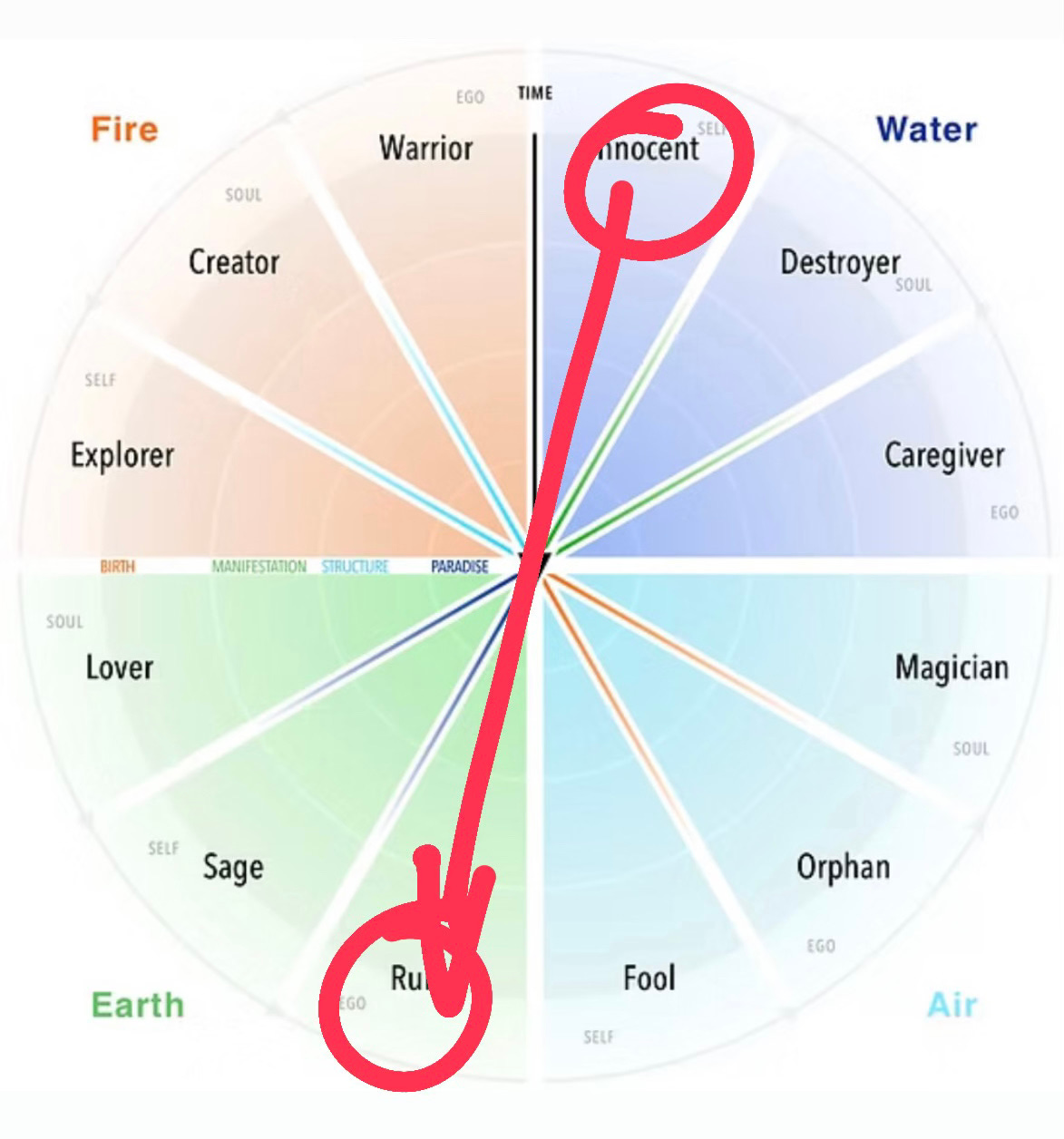
The Innocent–Ruler axis has already been mapped in the genre series as the tension between purity and power, sacrifice and order.
Now we test it structurally. If this polarity defines the genre, how does it generate a four-act arc?
To see it clearly, we place two radically different worlds side by side: Apocalypto, a tribal Eden collapsing under violent conquest. Gran Torino, suburban America shaped by war, guilt, and cultural shift.
One story unfolds through physical survival. The other through moral reckoning.
One protagonist runs through the jungle to protect life. The other walks toward death to restore it. Different landscapes. Same axis. Both move from Innocent toward Ruler. Both end in Innocent integration. But the path, and the cost, are not the same.
We begin with the cleaner arc:
Apocalypto — Short Archetypal Breakdown


Innocent → Ruler (Positive Yin with a twist, Water → Earth)
Need: defend the soul/family/tribe/world → Desire: establish order against new Rulers; survive the fall of the world.
Act I – Defining Shadow (Innocent Shadow)
Life in nature (unity/harmony). Jaguar Paw innocent (son, husband, hunter). Need: protect home/family/future. Paradise Lost: attack of the “new Rulers.”
Act II – Opposing Persona (Ruler Persona)
Captured/chained/city. World of the Rulers: hierarchy/sacrifice/gods without soul. False order. Pathological Ruler Persona (collective shadow). Survival = power/calculation; instinct → strategy.
Act III – Opposing Shadow (Ruler Shadow)
Escape → bloody struggle; kills pursuers; loses innocence; becomes master of death; understands their horror.
Act IV – Defining Integrated (Innocent Integrated)
Returns to his family; spares the last enemy; new ships arrive (new “gods”/Rulers). Paradise Regained/Lost Again. Chooses the forest/life; establishes inner order: awareness, not revenge.
Conclusion
The Need (soul) defends what it loves; the Desire (power) attempts to make it permanent. When innocence survives contact with power, a Ruler who knows the limit is born. The world does not change, rulers rotate.
Act Summary
• Act 1 – Innocent Shadow (naive paradise)
• Act 2 – Ruler Persona (contact with the system)
• Act 3 – Ruler Shadow (darkness of power, blood, violence)
• Act 4 – Innocent Integrated (return to purity through sacrifice)
Gran Torino — Extended Archetypal Breakdown
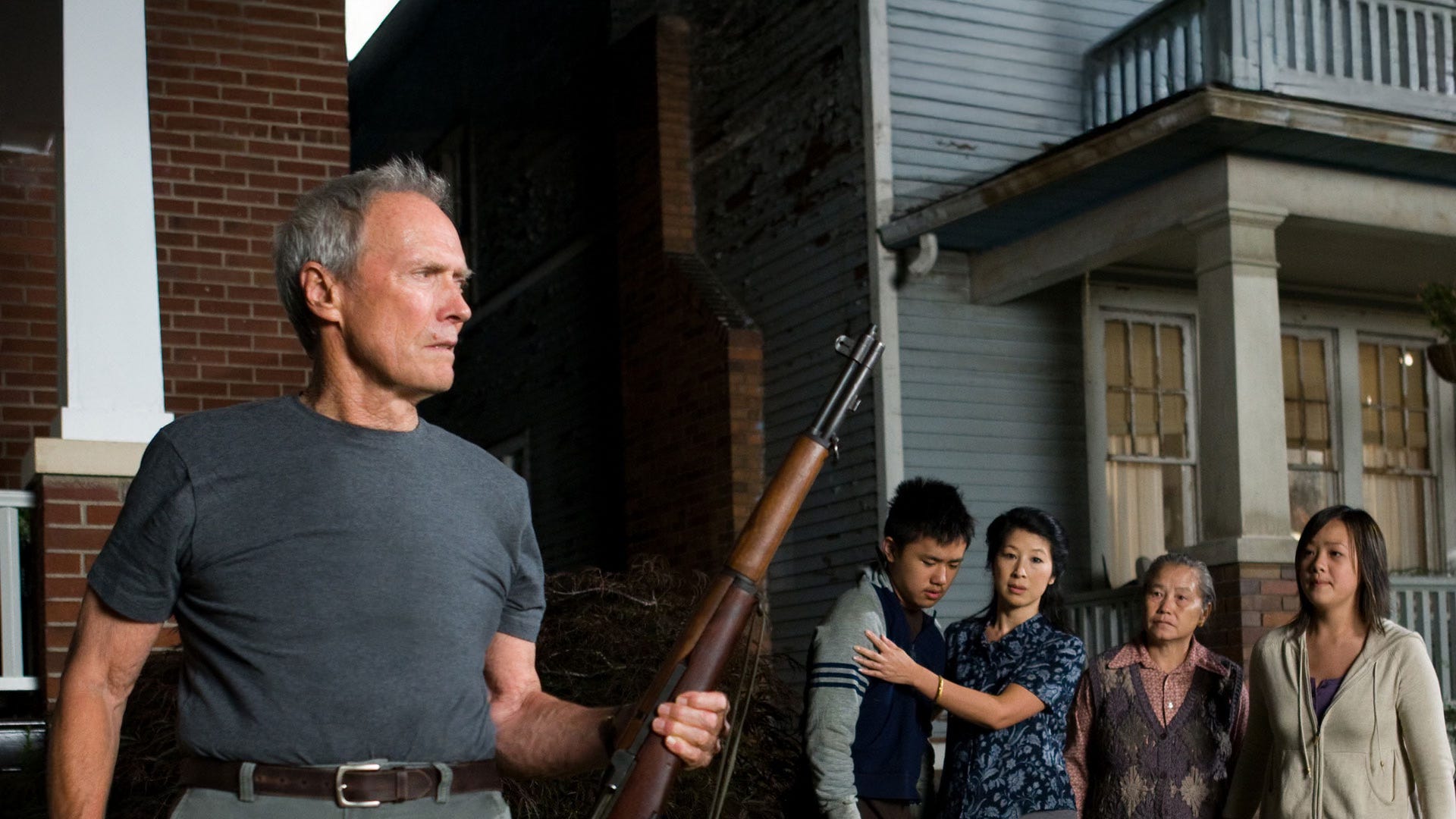
Innocent → Ruler (Redemptive Yin through Sacrifice, Water → Earth)
Something must be offered in order to preserve order or innocence.
Act I – Innocent Shadow
Walt begins as the Shadow of Innocence, a lost Innocent who has survived too much to still believe in meaning. His wife has died, his children have distanced themselves, and his faith in God has faded. The priest attempts to offer him redemption through religion, but he refuses: “I’ve got nothing to confess.” His conflict with dogma is a typical Innocent Shadow moment: separation from faith, yet nostalgia for it. A lost paradise (“fallen Eden”) is the core metaphor of the Innocent archetype.
His world is reduced to order: a mowed lawn, a polished car, routines that maintain the appearance of meaning. But this is only a defense against chaos. At the core lies the wound of innocence lost in war: he carries guilt from Korea, from the men he killed, from everything he saw and became.
This is Innocent Shadow, innocence shattered, still seeking redemption.
Act II – Ruler Persona
Walt attempts to restore a sense of control over a world that has changed. His neighborhood is now filled with immigrants, and in them he sees the end of the America he once knew. In truth, he is trying to defend order, Ruler Persona, an illusion of power over reality.
His encounter with the Hmong family triggers resistance, but also the first crack in his system. In them he recognizes what he has lost: community, mutual care, warmth. Though he initially despises them, he is drawn to what they have preserved, innocence, connection, faith in life.
In Tao and his sister, he sees an echo of his lost family. When Tao attempts to steal his car as part of a gang initiation, Walt reacts with rage, yet this conflict becomes a turning point. He realizes that Tao is not just foolish, but in real danger from the gang. Beneath the anger, a need to step in as a protector emerges. This is the moment when the Innocent begins to awaken through the role of the Ruler.
Act III – Ruler Shadow
Here Walt crosses into the dark side of authority. Convinced he knows what is right, he turns to violence. He beats a gang member, setting off retaliation. This is his fall into Ruler Shadow. No wisdom, just anger and wounded power.
His attempt to protect Tao and his family only brings them more suffering: the gang assaults Tao’s sister and shoots at the house. Walt realizes that violence cannot preserve innocence. He is only perpetuating what he has been fleeing his entire life.
In that realization, his transformation begins. His shadow is no longer anger, but remorse. He understands that he must stop the cycle of blood that began in Korea.
Act IV – Innocent Integrated
Walt initiates Tao. All along, he has been teaching him how to “be a man”, to work, to be responsible, to survive in a world that has become a battlefield. Now he understands he must teach him something greater: responsibility does not mean killing, but preserving.
He locks Tao in the basement to protect him. Tao asks: “How does it feel to kill a man?” Walt replies: “You don’t want to know. I’ve got blood on my hands.”
He goes alone, unarmed. He knows he is going to die, but it is a death with meaning. He takes the karma upon himself. He falls under the gang’s bullets, as if the number of bullets echoes the lives he once took in Korea, arms outstretched like Christ — Innocent Integration. Blood is shed again, but now it is his. He redeems what he once broke: trust, humanity, faith.
His death restores order. The gang, the Shadow Rulers, are arrested. Tao and his sister become the new guardians of the neighborhood. Tao wears Walt’s Silver Star on his chest, a symbol of honor, the transmission of responsibility, and moral transformation.
The film ends in the church, as it began, but the meaning is transfigured. At the beginning, the church was an empty form, cold and distant. At the end, it becomes a place of testimony. Faith is no longer dogma, but action. Even the priest has changed. Walt finds redemption not through God, but through a human act.
His blood closes the circle, from wound to salvation, from lost innocence to just order.
Homework
Take a film you love and name its axis in one sentence:
Defining archetype → Opposing archetype
Structure is not something you invent. It is something you uncover when the axis is clear.
Now write just four lines:
1. Defining Shadow
2. Opposing Persona
3. Opposing Shadow
4. Defining Integrated
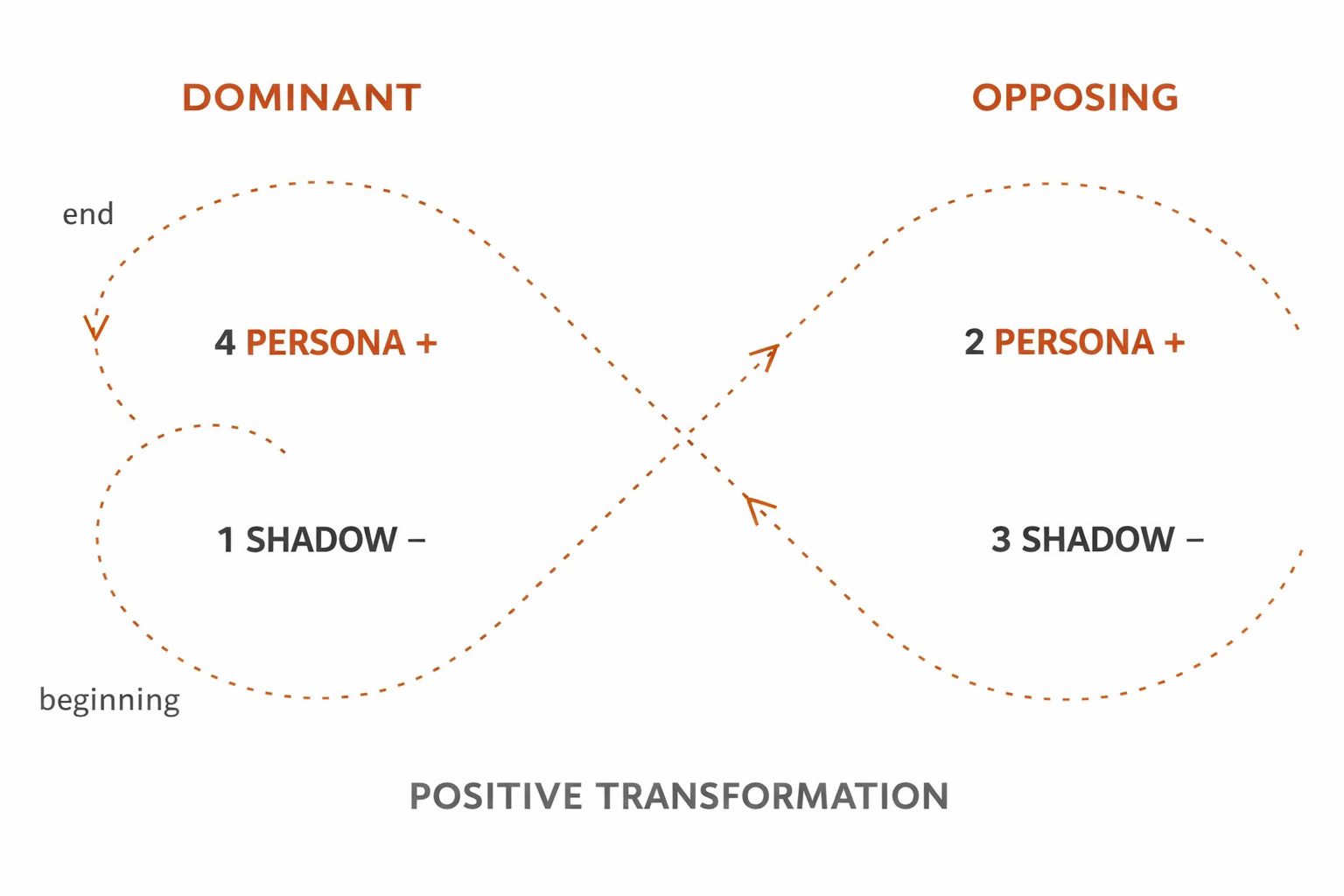
If the Cross is correct, the structure will appear.
Start in Shadow for a redemptive arc. Start in Persona for a tragic one.
Next time, we apply the Cross to a different axis.
And soon, I’ll share a diagnostic framework that moves from logline to a complete four-act structure.
If this helped you see structure more clearly, you can support the work here.
Thank you. Love,
Ana