

How to Write Exposition: From Identity to Scene
10 Iconic Films, One Battlefield

The exposition, the first 10–12 minutes of a film, is often described as the Ordinary World. In Intuitive Screenwriting, this stage belongs to the Warrior–Fool dynamic, and I read it as the Battlefield, more precisely, an identity battle within the protagonist.
One identity belongs to the line of desire, what the protagonist wants, claims, dreams of, or tries to preserve. The other belongs to the line of need, what the story will eventually force them to recognize, integrate, or become.
In the Intuitive Screenwriting system, this conflict can be read through the archetypal axis on the Wheel. One archetype expresses the protagonist’s desired identity; the opposite archetype expresses the identity the story is calling them toward.
Read together, these two archetypes reveal not only the central conflict, but also the character arc, the identity transformation, and, through it, the genre itself.
They also name the two identity poles already active in the exposition.
In The Silence of the Lambs, Clarice is placed between the Innocent and the Ruler: the unprotected child and the one who must learn to protect. In Kung Fu Panda, Po is placed between the Fool and the Warrior: the comic, inadequate body and the heroic identity already hidden inside it. In Aftersun, Sophie is placed between the Caregiver and the Sage: the daughter still wounded by the absent father and the adult woman trying to understand him.
This is why exposition becomes much easier to read once the genre axis is visible. We are no longer asking only what information the opening gives us. We are asking which identity can no longer hold, which identity is trying to emerge, and how the first scenes make that conflict visible.
The following examples should therefore be read on two levels at once.
First, as concrete exposition: what do we literally see, hear, and learn in the opening scenes?
Second, as structure: how do those details reveal the protagonist’s identity conflict before the plot fully begins?
A woman peeling potatoes, an insomniac taxi driver, a child watching old footage of her father, or a panda dreaming of kung fu are not just atmospheric details. They are structural information. They show how meaning becomes craft: how the story turns an abstract identity crisis into scenes, actions, images, objects, gestures, and behavior.
In this way, in Intuitive Screenwriting, exposition is the first visible form of transformation.
In other words, these films are read through the Wheel and from the writer’s position: what has to be placed in the first scenes for the whole transformation to already be present.
The films explored through this framework:
The Searchers
Kung Fu Panda
Taxi Driver
A Bigger Splash
The Piano Teacher
Force Majeure
The Silence of the Lambs
Sunset Boulevard
Jeanne Dielman
Aftersun

The Searchers (1956), John Ford
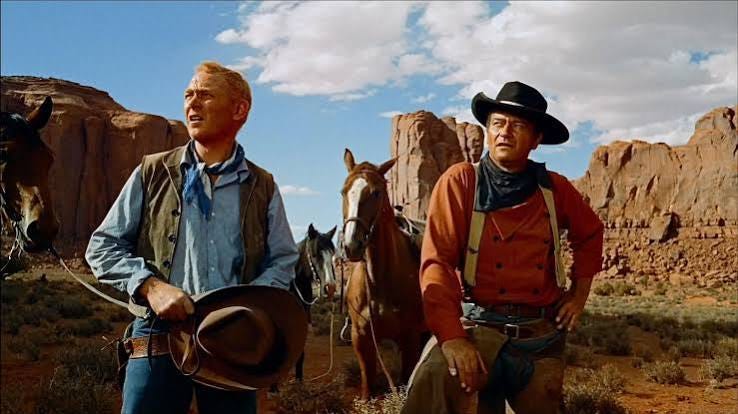
Ethan’s Battlefield is belonging.
He returns home after years of war, but the exposition immediately places him in the position of an outsider. He belongs to this family by blood and memory, yet the house is no longer a place he can fully inhabit.
His identity crisis is tied to the Innocent–Ruler axis: who sets the borders, who makes the rules, and who is able to protect what he calls “his own.”
Precisely because Ethan is aware of his own non-belonging, he tries to turn belonging into something he can control. Martin already reveals this conflict: he is the adopted son of Aaron and Martha, partly Native American, saved by Ethan in the past, and yet Ethan sees him as someone who does not truly belong.
The exposition then gives Ethan his first test as Ruler: to save the Innocent. He understands the Comanche strategy before the others do. He sees that the cattle theft was a trap, that the men have been drawn away from the house, and that the horses are too exhausted to return in time.
Ethan is split between the man who once saved Martin but still refuses to recognize him as his own; the man who loves Martha but cannot belong to her home; the man who will spend years searching for Debbie but must first decide whether she still belongs to their blood; and the man who wants to protect the home while seeing the world through war, race, and exclusion.
Through Ethan’s split, the film opens a larger question of American identity: who has the right to define the land, the family, and the borders of belonging?
Exposition information before the inciting incident:
Ethan returns after years away. Martha, his brother’s wife, is the first person to meet him on the porch. The whole family is gathered: Martha, Aaron, the children, and the dog. Martha kisses him emotionally and welcomes him home.
Ethan lifts Debbie, mistaking her for Lucy, because the children have grown since he last saw them.
Martin, Aaron and Martha’s adopted son of Native American origin, arrives for dinner. Ethan, who once saved him but refuses any credit for it, still looks at him as someone who does not truly belong.
Ethan gives Debbie a gold medal from his mysterious postwar years, raising further questions about where he has been and how he survived.
Aaron explains that other families have left the area because life there is too hard and dangerous.
That night, Ethan is left alone on the porch with only the dog for company. He looks toward the bedroom door as Aaron takes Martha inside and closes the door.
The next morning, local Rangers gather to investigate a Comanche cattle raid. During the deputy oath, Ethan appears and openly reveals he has never relinquished his loyalty to the Confederacy.
Before the men leave, Reverend Clayton notices Martha tenderly handling Ethan’s coat, revealing the unresolved intimacy between them.
On the trail, the men discover that the raid does not make sense as a simple cattle theft. The cattle have been killed, but not taken. Ethan understands that it was a trap.
The Comanche have drawn the men away from the Edwards home. Ethan knows the horses are too exhausted to make the long ride back in time.
Back at the Edwards home, the family realizes the danger. Ben asks Martha whether she wishes Uncle Ethan were there.
Debbie is sent away from the house, where Scar finds her.
